Reach Truck vs Counterbalance Forklift: Which Wins?

Reach Truck vs Counterbalance Forklift: Which Wins?

Reach truck vs counterbalance forklift refers to the comparison between two essential types of material handling equipment used in warehouses and logistics operations. Each machine offers unique capabilities related to load handling, aisle width, lift height, and operational environment. Selecting the right forklift type is critical for optimizing storage space, improving efficiency, and ensuring safety in warehouse settings, especially in the diverse operational landscape of Humble, TX and the greater Houston area.

Key Takeaways

  • Reach trucks excel in narrow aisle warehouses, providing high lift heights and better maneuverability indoors.
  • Counterbalance forklifts offer greater load capacity and outdoor versatility but require wider aisles.
  • Operational environment determines equipment choice: electric reach trucks are ideal indoors, while propane counterbalance forklifts suit outdoor use.
  • Training and safety requirements differ between the two, with reach truck operators needing specialized instruction.
  • Total cost of ownership includes purchase price, maintenance, energy consumption, and local dealer support availability.

What Is a Reach Truck?

What Is a Reach Truck?, Upright Forklift

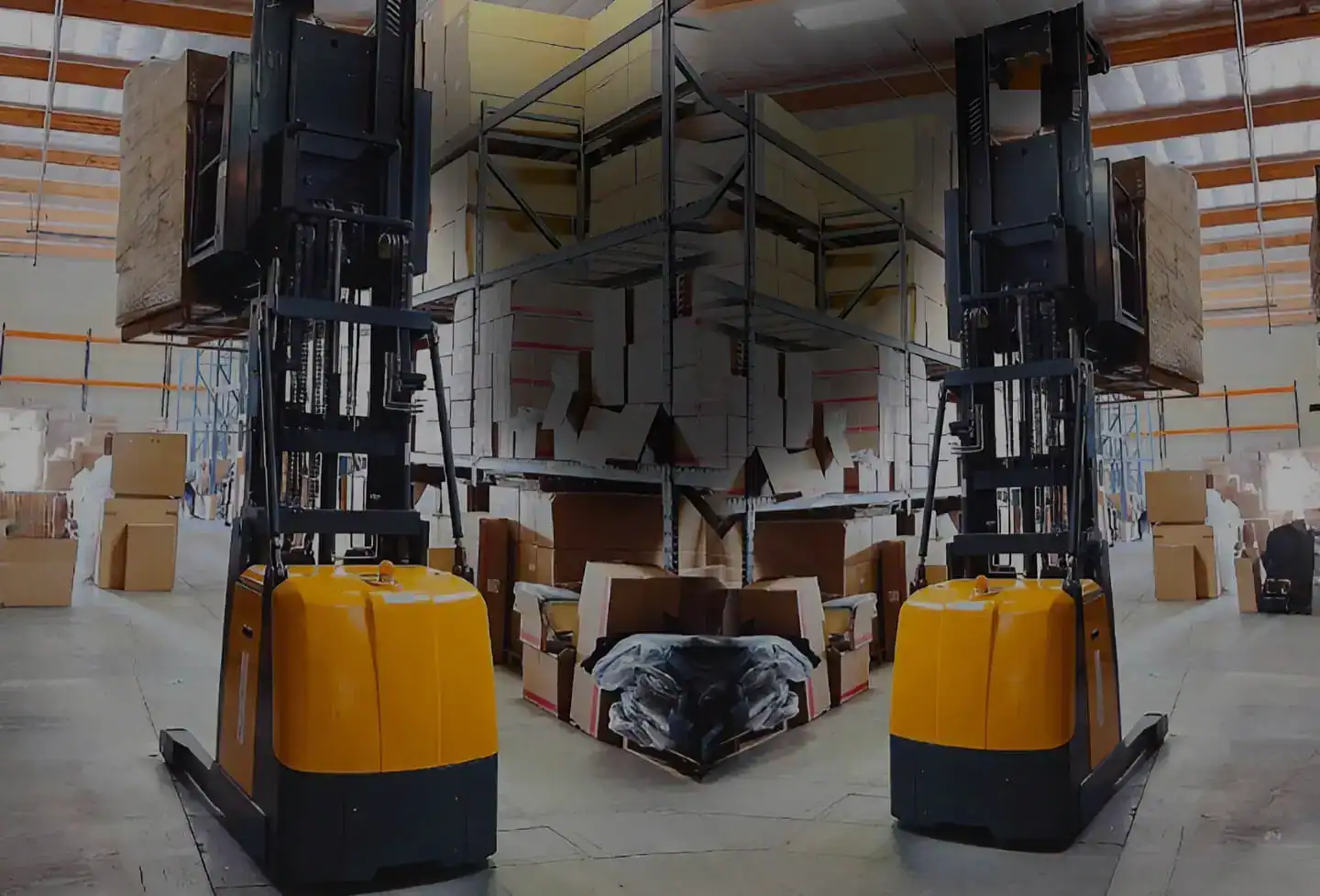
A reach truck is a type of electric forklift designed specifically for warehouse environments with narrow aisles and high storage racks. Reach trucks are characterized by their extendable forks that “reach” forward to pick up loads without moving the entire truck forward. This design allows them to operate efficiently in tight spaces, maximizing storage density by enabling aisles as narrow as 8 to 10 feet wide.

Reach trucks are electric-powered, making them ideal for indoor use where emissions and noise must be minimized. Their compact chassis and smaller turning radius enhance maneuverability, allowing operators to handle loads at significant heights, often exceeding 30 feet. The load is typically centered between the front wheels, which helps maintain stability when lifting to high rack levels.

In the Houston and Humble, TX warehouse sectors, reach trucks are a popular choice for businesses aiming to optimize vertical storage while maintaining operational efficiency in limited floor space.

Key Features of Reach Trucks

  • Electric power source with battery operation
  • Extendable forks for reaching into racks
  • Compact design for narrow aisle operation
  • High lift height capability, often up to 40 feet
  • Operator compartment designed for seated or stand-up operation

What Is a Counterbalance Forklift?

What Is a Counterbalance Forklift?, Upright Forklift

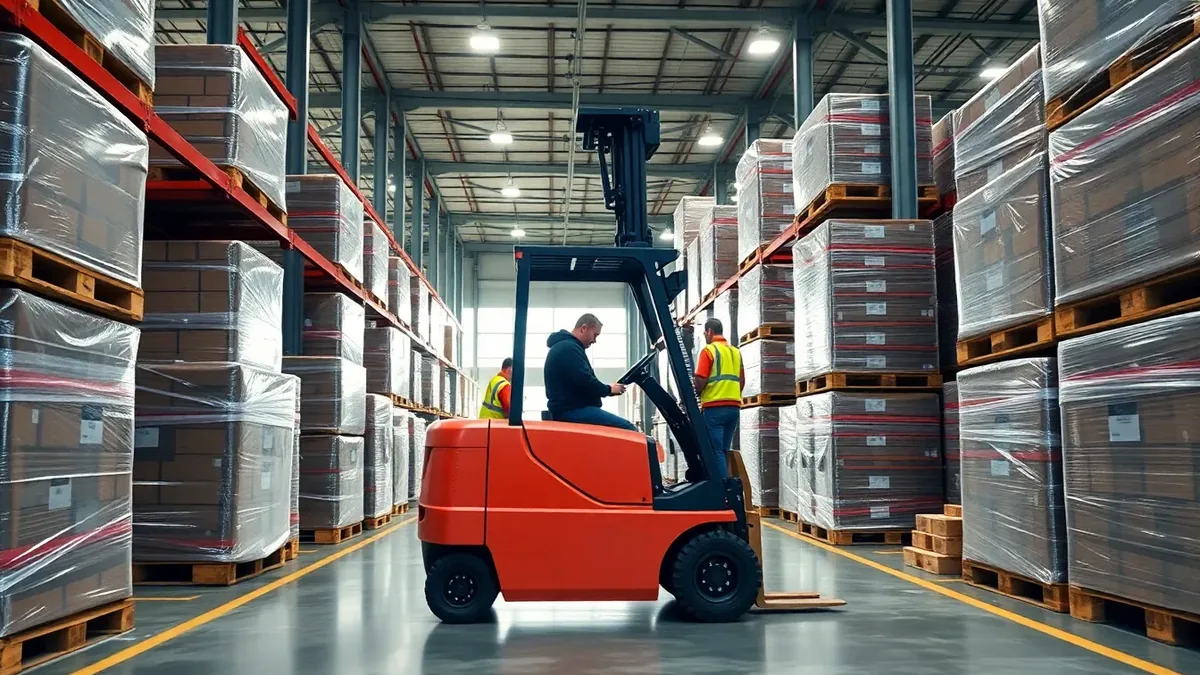
A counterbalance forklift is a versatile material handling truck that features a weight at the back of the vehicle to counterbalance the load lifted at the front forks. This type of forklift is one of the most common in warehouses and outdoor environments due to its straightforward design and ability to handle a wide range of load sizes and weights.

Counterbalance forklifts are available in electric, propane, and diesel models, with propane being particularly common in the Houston area for outdoor and mixed-use operations. Unlike reach trucks, counterbalance forklifts do not have extendable forks; instead, the operator drives the truck directly up to the load. This means they require wider aisle widths, typically 12 to 14 feet or more, to operate safely and effectively.

These forklifts are well-suited for loading docks, outdoor yards, and warehouses with wide aisles and lower rack heights. Their robust design allows them to handle heavier loads, often exceeding 10,000 pounds, making them indispensable for construction companies and logistics operations in the Texas Gulf Coast region.

Key Features of Counterbalance Forklifts

  • Counterweight at the rear for load stability
  • Available in electric, propane, and diesel power sources
  • Simple, direct approach to load handling
  • Suitable for indoor and outdoor use
  • Higher load capacity compared to reach trucks

Key Differences Between Reach Trucks and Counterbalance Forklifts

Key Differences Between Reach Trucks and Counterbalance Forklifts, Upright Forklift
FeatureReach TrucksCounterbalance Forklifts
Power SourceElectric (battery)Electric, Propane, Diesel
Aisle Width8 to 10 feet (narrow aisles)12 to 14 feet or wider
Lift HeightUp to 40 feetTypically up to 20-25 feet
Load Capacity3,000 to 5,500 lbs4,000 to 10,000+ lbs
Operational UseIndoor onlyIndoor and outdoor
Turning RadiusSmaller, optimized for tight spacesLarger, requires more space
Load HandlingExtending forks reach into racksDirect approach to load

Aisle Width and Warehouse Space Requirements

One of the most critical considerations when choosing between reach trucks and counterbalance forklifts is the aisle width and overall warehouse space. Reach trucks are engineered to maximize storage density by operating in narrow aisles, typically between 8 and 10 feet wide. This capability allows warehouses in Humble and the broader Houston area to optimize expensive real estate by using taller racks and tighter aisles.

Counterbalance forklifts require wider aisles, generally 12 to 14 feet or more, due to their larger turning radius and the need to approach loads directly. Warehouses with ample floor space or outdoor operations benefit from counterbalance forklifts but may sacrifice some storage capacity.

For example, a distribution center in Katy with limited floor space but high vertical storage needs will gain operational efficiency with reach trucks. Conversely, a construction materials yard in Conroe may prefer counterbalance forklifts to handle bulky loads outdoors.

Rack Height Benchmarks

  • Reach trucks typically handle racks up to 40 feet high.
  • Counterbalance forklifts are efficient up to 20-25 feet rack height.

Lift Height and Load Capacity Compared

Lift height and load capacity are key performance metrics that influence equipment selection. Reach trucks prioritize lift height to access high racks in narrow aisles, with typical maximum lift heights ranging from 30 to 40 feet. However, their load capacity is generally lower, averaging between 3,000 and 5,500 pounds.

Counterbalance forklifts offer a wider range of load capacities, often exceeding 10,000 pounds for heavy-duty models. Their lift height is usually lower than reach trucks, commonly between 15 and 25 feet, which suits operations with lower rack systems or outdoor loading docks.

Warehouse operators in Sugar Land and Cypress should evaluate their typical load weights and rack heights to determine which forklift type aligns with their operational demands.

Indoor vs Outdoor Operational Use Cases

Reach trucks are predominantly electric and designed for indoor use due to their battery-powered operation and zero emissions. They are ideal for climate-controlled warehouses and environments where noise reduction is important.

Counterbalance forklifts, available in electric, propane, and diesel variants, are more versatile for both indoor and outdoor applications. Propane-powered counterbalance forklifts are common in outdoor yards and construction sites around The Woodlands and Baytown, where fuel availability and rugged terrain are considerations.

Environmental conditions in the Texas Gulf Coast, including humidity and temperature variations, also influence equipment choice. Electric reach trucks require appropriate battery charging infrastructure, which Upright Forklift supports with local service and maintenance options.

Operator Training Requirements for Each Machine

OSHA regulations require forklift operators to be trained and certified for each specific type of equipment they operate. Reach trucks, due to their specialized controls and narrow aisle operation, necessitate additional training focused on stability, reach mechanisms, and confined space maneuvering.

Counterbalance forklift operators must be proficient in handling varying load weights, operating on different surfaces, and managing outdoor conditions. Training programs in the Houston area often include hands-on instruction and safety compliance aligned with OSHA standards and MHIA guidelines.

Upright Forklift offers comprehensive operator training tailored to both reach trucks and counterbalance forklifts, ensuring safety and operational efficiency for warehouse and construction personnel.

Total Cost of Ownership: Purchase, Maintenance, and Energy

The total cost of ownership (TCO) for reach trucks and counterbalance forklifts encompasses purchase price, maintenance, energy consumption, and dealer support. Reach trucks generally have a higher upfront cost due to their specialized design and electric powertrain but benefit from lower fuel costs and reduced maintenance compared to internal combustion counterbalance forklifts.

Counterbalance forklifts may have lower initial purchase prices, especially propane models, but incur higher fuel and maintenance expenses. Battery management and charging infrastructure for electric reach trucks represent additional investments but contribute to long-term sustainability and operational savings.

For small to mid-size warehouse operations in Pearland and Pasadena, rental options with flexible lease terms offered by Upright Forklift provide cost-effective access to both truck types without large capital expenditure.

Which Equipment Is Right for Your Warehouse?

Choosing between reach trucks and counterbalance forklifts depends on several factors:

  • Warehouse layout and aisle width: Narrow aisles favor reach trucks; wide aisles suit counterbalance forklifts.
  • Load characteristics: Heavy, bulky loads may require counterbalance forklifts; lighter, high-stacked loads fit reach trucks.
  • Operational environment: Indoor, climate-controlled warehouses benefit from electric reach trucks; outdoor yards require counterbalance forklifts.
  • Budget and cost considerations: Rental versus purchase, maintenance, and energy costs impact the decision.
  • Safety and training: Operator skill level and training availability guide equipment choice.

Upright Forklift’s experienced technical team in Humble, TX, offers personalized consultations to help logistics managers and warehouse operators in Houston, Katy, and surrounding areas determine the best forklift mix for their operations.

Reach Trucks vs Other Types of Forklifts

Beyond counterbalance forklifts, warehouses may consider other forklift types such as pallet jacks, order pickers, and narrow aisle trucks. Reach trucks stand out for their ability to maximize vertical storage in narrow aisles, unlike pallet jacks which are limited to floor-level handling.

Compared to turret trucks and very narrow aisle (VNA) forklifts, reach trucks provide a balance of cost and functionality for many mid-size warehouses. Their electric power and maneuverability make them a preferred solution for the Houston industrial market.

Frequently Asked Questions

What is the main difference between a reach truck and a counterbalance forklift?

The main difference lies in design and operational use: reach trucks have extendable forks for narrow aisle, high lift indoor use, while counterbalance forklifts use a rear counterweight and require wider aisles, supporting indoor and outdoor loads.

Can a reach truck be used outdoors?

Reach trucks are primarily designed for indoor use due to their electric power source and sensitivity to uneven surfaces. They are not well-suited for outdoor or rough terrain operations common in the Houston area.

Which is better for narrow aisle warehouses, a reach truck or a counterbalance forklift?

Reach trucks are better suited for narrow aisle warehouses because of their compact size and ability to operate in aisles as narrow as 8 feet, maximizing storage density.

Do reach truck operators need special training compared to counterbalance forklift operators?

Yes, reach truck operators require specialized training focused on maneuvering in narrow aisles and managing the reach mechanism, in addition to general forklift safety training.

Are reach trucks more expensive than counterbalance forklifts?

Reach trucks typically have a higher upfront cost but lower operational costs due to electric power. Counterbalance forklifts may have lower purchase prices but higher fuel and maintenance expenses.

What load capacity can reach trucks and counterbalance forklifts handle?

Reach trucks usually handle loads between 3,000 and 5,500 pounds, while counterbalance forklifts can handle heavier loads, often exceeding 10,000 pounds depending on the model.

How do I choose the best material handling equipment for my warehouse?

Consider aisle width, load size and weight, indoor vs outdoor use, budget, and operator training when selecting equipment. Consulting with local experts like Upright Forklift in Humble, TX, ensures the right fit.

Conclusion

Choosing between reach trucks and counterbalance forklifts is a strategic decision that impacts warehouse efficiency, safety, and cost management. Reach trucks are the preferred solution for maximizing vertical storage in narrow aisle, indoor environments typical of many Houston-area warehouses. Counterbalance forklifts offer versatility and higher load capacity suited for outdoor and mixed-use operations.

At Upright Forklift, we leverage decades of experience serving Humble, TX, and the greater Houston region to provide expert guidance, well-maintained equipment, flexible rental options, and comprehensive operator training. Contact us today to optimize your forklift fleet and enhance your warehouse productivity.

Author: Upright Forklift Repair

Published: June 2024 | Last Reviewed: June 2024

Upright Forklift Repair technicians are certified by the Industrial Truck Association and maintain partnerships with major forklift manufacturers to ensure quality service and parts availability across the Texas Gulf Coast.

For more information on OSHA forklift standards, visit OSHA Forklift Safety. For industry best practices, see the Material Handling Industry of America.

Customer Use Case: A logistics center in Spring, TX, switched from propane counterbalance forklifts to electric reach trucks for their high-density storage area. This transition reduced aisle width by 30%, increased storage capacity by 20%, and lowered energy costs by 15%, demonstrating the operational and financial benefits of the right equipment choice.

Contact Upright Forklift today to discuss how our forklift sales, rentals, maintenance, and training services can support your warehouse or construction operation in Humble, Houston, and surrounding communities.

Scroll to Top