
Key Highlights
Here’s a quick look at what we’ll cover:
- Regularly maintaining your scissor lifts is the best way to avoid unexpected downtime.
- Common issues often involve problems with the hydraulic system, like low hydraulic fluid, or electrical faults.
- Choosing between on-site and in-shop service depends on the complexity of the repair.
- Preventive maintenance programs help you catch small issues before they become costly repairs.
- Always rely on certified technicians to ensure your equipment is serviced correctly and safely.
Introduction
Your scissor lifts and boom lifts are essential for getting work done efficiently and safely at heights. But what happens when one of them breaks down? Unexpected equipment failure can halt your entire operation, leading to costly delays. The key to preventing this is a solid maintenance plan. Whether you need a quick fix or a major overhaul, understanding your repair options is crucial. This guide will walk you through everything you need to know about expert scissor lift repair.
Understanding Scissor Lift Repair Needs
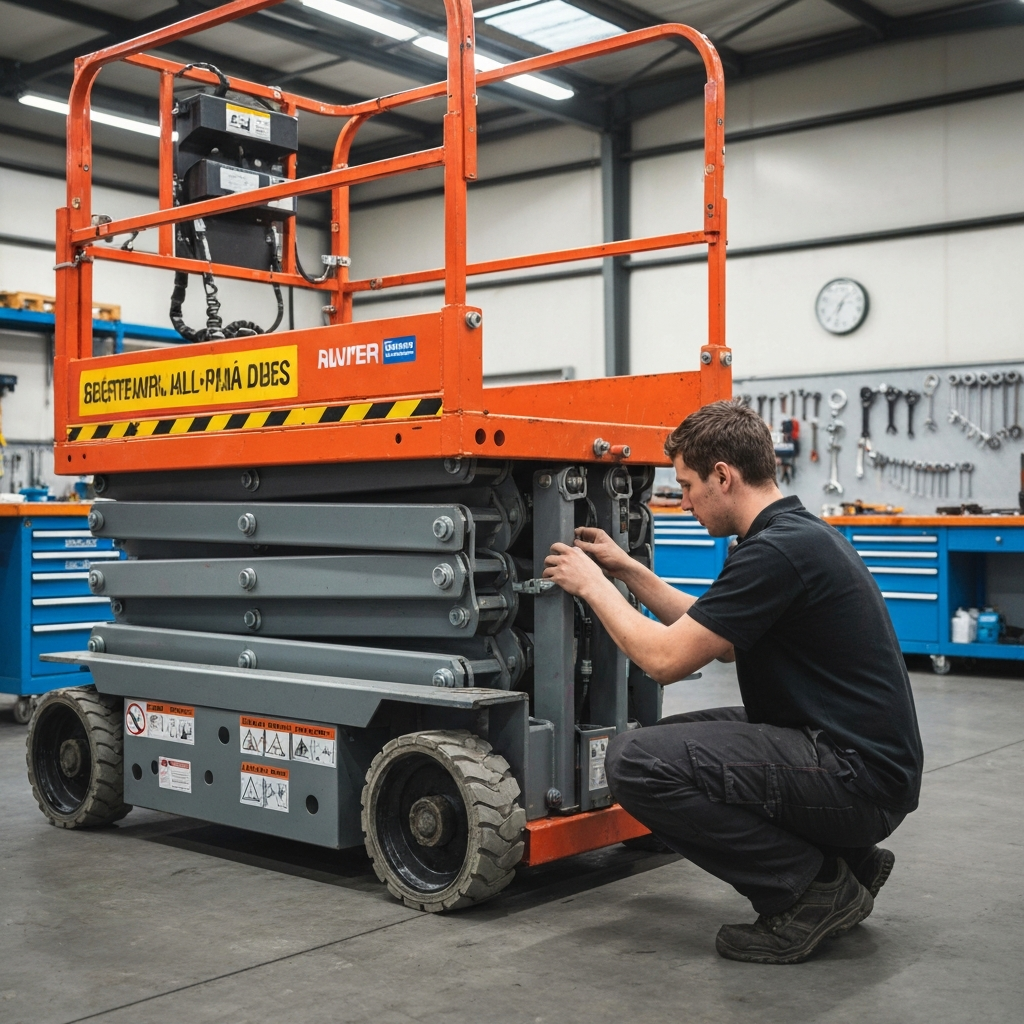
Knowing when your scissor lifts need attention is the first step toward preventing major breakdowns. Like any heavy machinery, these lifts require regular maintenance to stay in top condition. Proactive maintenance programs are designed to spot potential problems, such as hydraulic leaks or a failing hydraulic system, before they cause serious issues.
How often should you inspect your equipment? According to OSHA, daily pre-shift inspections are mandatory, and a more thorough annual inspection by a qualified person is also required. This regular maintenance schedule ensures your equipment remains safe and operational, saving you from expensive surprises down the road. Let’s look at some common problems you might encounter.
Common Problems That Require Professional Attention
Some scissor lift problems are too complex or dangerous to fix yourself. Ignoring them can lead to costly repairs and create serious safety hazards that could violate OSHA standards. It’s always best to call in a professional when you notice significant issues with your equipment.
What are the most common issues that demand an expert’s touch? Professional help is often required for:
- Hydraulic failure: Issues with the lift’s power source, like a broken pump or major leaks.
- Electrical problems: Malfunctioning controls, dead batteries, or faulty wiring.
- Structural damage: Cracks in the chassis or damage to the lift mechanism.
Attempting to diagnose these problems without proper training can make matters worse. Certified technicians have the tools and expertise to identify the root cause of the failure and perform a safe, effective scissor lift repair. This ensures your equipment is fixed correctly the first time, preventing further damage and ensuring operator safety.
Signs Your Scissor Lift Needs Repair or Maintenance
Staying ahead of repairs means knowing what to look for. As part of regular maintenance, you should keep an eye out for warning signs that your scissor lift needs service. Catching these early can prevent a small issue from turning into a major breakdown.
Be on the lookout for these clear indicators:
- Visible hydraulic fluid leaks on the floor.
- Slow or jerky movements when lifting or lowering the platform.
- Unusual grinding or squealing noises during operation.
- Warning lights or error codes on the control panel.
Part of routine maintenance involves checking hydraulic fluid levels, inspecting hoses for cracks or wear, and listening for any unusual sounds. If you spot any of these signs, don’t wait. Addressing them immediately helps prevent hydraulic leaks and other problems that could sideline your equipment and disrupt your workflow.
Choosing On-Site vs. In-Shop Scissor Lift Repair
When your scissor lifts need service, you generally have two options: on-site repair at your facility or in-shop repair at a dedicated service center. The right choice depends on the nature of the problem, the urgency, and your operational needs. On-site repairs are great for minimizing downtime for smaller issues.
However, more complex jobs may require the equipment and space available only in a shop. Factors like OEM parts availability, warranty requirements, and the scope of the repair will influence your decision. Let’s explore when each option makes the most sense for your equipment.
When to Consider On-Site Repairs for Your Equipment
On-site scissor lift repair is all about convenience and speed. When a machine goes down, having a technician come to you is the fastest way to get it back up and running. This option is ideal for minimizing disruptions and is perfect for a variety of common issues.
Consider calling for on-site service when you need:
- Quick fixes for minor problems.
- Basic checks and routine maintenance.
- Replacement of components like batteries or hydraulic pumps.
- Immediate attention to reduce downtime.
The greatest benefit of on-site repair is responsiveness. Mobile technicians can often arrive at your location within hours, equipped to handle most common repairs on the spot. This means less downtime for your equipment and a quicker return to productivity for your team, making it a highly efficient choice for many businesses.
Benefits of In-Shop Repairs for Complex Issues
While on-site repairs are great for speed, some jobs are just too big to handle in the field. For a major failure or extensive overhaul, in-shop repair is the better solution. A dedicated repair facility has specialized tools and a controlled environment to tackle the most challenging issues.
In-shop repairs are recommended for:
- Complete overhauls or rebuilds.
- Complex diagnostic work.
- Major structural repairs.
- Situations where extensive disassembly is needed.
Bringing your lift to a shop ensures that the work is performed to the highest standards. Technicians have access to a full inventory of OEM and aftermarket parts and can perform comprehensive testing after the repair is complete. You also get detailed documentation of the work done, which is essential for your records and for maintaining the equipment’s value.
Key Services Included in Expert Scissor Lift Repairs
Professional scissor lift repair services offer more than just a quick fix. They provide expert support that keeps your equipment running safely and efficiently. From routine maintenance programs to emergency responses, qualified technicians serve a wide range of industries that rely on aerial lift equipment.
These services are designed to be comprehensive, ensuring every part of your scissor lifts is in excellent condition. Whether it’s a scheduled check-up or an unexpected breakdown, having a reliable service partner is key. Below, we’ll explore the specific types of maintenance and repair services you can expect.
Routine Maintenance Services Offered
Preventive maintenance (PM) is the foundation of a reliable fleet. These scheduled service plans are designed to catch small issues before they become big problems. A typical PM plan includes comprehensive safety checks and a thorough inspection of the hydraulic system and other critical components.
So, what does routine maintenance for a scissor lift actually include? A professional technician will follow a detailed checklist to ensure nothing is missed. This proactive approach keeps your equipment compliant with safety standards and extends its operational life.
Here is a breakdown of typical PM services: | Service Category | Checks Included | |——————|———————————————————| | Electrical Systems | Test battery, check charger, inspect wiring, and test alarms. | | Hydraulic System | Check fluid levels, inspect hoses for leaks, test cylinders. | | Safety & Compliance | Inspect brakes, tires, guardrails, and emergency stop functions. | | Mechanical Parts | Lubricate moving parts, check for structural wear or damage. |
Emergency and Specialized Repair Options
Even with the best maintenance plan, unexpected breakdowns can happen. When they do, you need access to fast and reliable emergency repair services. Many service providers offer rapid-response options to get a technician to your site as quickly as possible, minimizing your downtime.
Are there emergency scissor lift repair services in your area? Yes, companies like Upright Forklift Repair have teams ready to respond. These services are crucial for:
- Sudden equipment failures during a job.
- Hydraulic system blowouts.
- Electrical malfunctions that stop the lift from operating.
- Accidental damage that compromises safety.
When you call for an emergency repair, certified technicians are dispatched to diagnose and fix the problem. These experts are often trained to service not just scissor lifts but also other equipment like forklifts and telehandlers. Their goal is to get your machinery back in service safely and swiftly.
How to Find Qualified Scissor Lift Repair Technicians in the United States
Finding a trustworthy scissor lift repair service can feel overwhelming, but a few key steps can simplify your search. Start by looking for companies that employ certified technicians with years of experience working on major brands like Genie, Skyjack, and Haulotte. A technician’s qualifications are a strong indicator of the quality of service you can expect. Check online reviews and ask for references from other businesses in your area to gauge a company’s reputation.
When you narrow down your options, don’t be afraid to ask about their pricing structure and response times. A reliable provider will be transparent about their costs and can give you an estimate for the repair. Companies like Upright Forklift Repair prioritize clear communication and have the expertise to service mixed fleets, making them a one-stop shop for all your aerial lift equipment needs. Taking the time to find the right partner will save you headaches and money in the long run.
Conclusion
In conclusion, understanding the intricacies of scissor lift repair is essential for ensuring the safety and efficiency of your equipment. By recognizing common problems, knowing when to seek on-site versus in-shop repairs, and finding qualified technicians, you can significantly reduce downtime and keep your operations running smoothly. Whether opting for routine maintenance or specialized services, always prioritize expert help to safeguard your investment. If you have any questions or need assistance with your scissor lift repair needs, don’t hesitate to get in touch!
On-Site or In-Shop: Which Option is Right for You?
Deciding between on-site and in-shop scissor lift repair ultimately comes down to balancing urgency, complexity, and cost. For minor issues where downtime is a major concern, on-site repair is often the most efficient choice. A technician comes directly to you, gets the job done, and your operations continue with minimal interruption. This convenience is a huge benefit for busy worksites.
However, for major overhauls or complex diagnostics, an in-shop repair provides a more thorough solution. The cost of a scissor lift repair can vary significantly based on the problem and parts needed, but in-shop services may be more cost-effective for extensive work by preventing repeat issues. Considering the total cost of ownership, investing in a comprehensive repair at a dedicated facility can be smarter than opting for a quick field patch. Talk to an expert support team to determine the best path for your specific situation.
Fast and Efficient Scissor Lift Repair Services
When your scissor lifts are down, every minute counts. That’s why responsiveness is one of the most important qualities to look for in a repair service. A provider that can get a technician to your site quickly can make the difference between a minor inconvenience and a major operational delay. Fast servicing helps you get your equipment back to work, keeping your projects on schedule.
Finding a reliable service provider means looking for a team that understands this urgency. Whether you need a simple hydraulic fluid top-off or a more complex engine repair, you want a partner who acts fast. Companies that offer mobile repair fleets are often your best bet for quick turnarounds. This focus on speed and efficiency ensures that your scissor lifts receive the attention they need without causing prolonged downtime.
Common Problems That Require Repair
Many common scissor lift problems stem from the systems that do the most work. For example, electrical problems are frequently traced back to battery issues, as constant charging and discharging takes a toll over time. Similarly, issues with low hydraulic fluid often point to worn seals or damaged hoses, which are natural wear-and-tear items in a high-pressure system.
These issues aren’t unique to scissor lifts; similar problems can affect other warehouse equipment like forklifts and pallet jacks. Understanding that these are recurring maintenance needs helps you plan for them. Regular inspections of batteries, fluid levels, and hoses can catch these common scissor lift problems early, preventing the kind of failure that brings your work to a complete stop.
Trust the Experts for Reliable Scissor Lift Repairs
When it comes to scissor lift repair, not just anyone should be working on your equipment. Entrusting your machinery to certified technicians is crucial for ensuring safety and reliability. A qualified technician should have formal training and certifications for working on aerial lifts, along with years of experience. This expertise guarantees they understand the intricate systems of your lift and can diagnose problems accurately.
Furthermore, a professional technician will be well-versed in OSHA regulations, ensuring all repairs meet federal safety standards. They also know how to perform services that keep your manufacturer’s warranty intact. At Upright Forklift Repair, our technicians have the qualifications and experience needed to provide dependable repairs, giving you peace of mind that your equipment is in capable hands. Don’t risk your safety or investment on unqualified service.
Minimizing Downtime with On-Site Repairs
In any business, downtime is lost money. When equipment like a scissor lift is out of commission, projects stall and productivity suffers. This is where on-site repairs make a significant impact. By having a technician come to your location, you eliminate the time and hassle of transporting the machine to a shop. The goal is simple: achieve less downtime and get back to work faster.
The key to this efficiency is responsiveness. A mobile repair service with expert support can quickly dispatch a technician who arrives with the necessary tools and parts to handle most common issues. This immediate attention means your scissor lift can often be repaired and operational again in a matter of hours, not days. For businesses that can’t afford to wait, on-site repair is the clear choice for minimizing disruptions.
Comprehensive In-Shop Repairs for More Complex Issues
Sometimes, a repair is too significant for a field technician to handle. In cases of a major failure, such as a complete breakdown of the hydraulics system or severe structural damage, in-shop repairs are the only way to go. A repair shop provides a controlled environment with heavy-duty lifting equipment and specialized diagnostic tools that are not available on a mobile service truck.
This setting allows technicians to perform deep-dive diagnostics and complete rebuilds to factory specifications. They have access to a wider inventory of OEM and aftermarket parts, ensuring the right component is used for the job. For businesses enrolled in long-term service programs, sending a machine to the shop for a comprehensive overhaul can be a planned part of extending its life, ensuring it returns to you in peak condition.
When is a scissor lift no longer worth fixing?
A scissor lift may no longer be worth fixing when repair costs exceed its market value or if it requires frequent repairs, indicating a decline in reliability. Additionally, if the lift’s safety features are outdated or it’s incompatible with current regulations, replacement might be a more viable option.