Key Highlights
- Knowing the signs of wear, like slipping gears or strange noises, is key to preventing major forklift transmission issues.
- Routine maintenance, including checking transmission fluid, helps you avoid costly downtime and extend your equipment’s life.
- Ignoring small issues with your forklift transmission can quickly lead to complete transmission failure and expensive repairs.
- Deciding between a transmission repair and a full replacement depends on the forklift’s age, cost, and overall reliability.
- Operator habits and overloading are common causes of transmission problems that can be prevented with proper training.
Introduction
When your forklift’s transmission has a problem, your entire operation can grind to a halt. The forklift transmission is a critical component that transfers power from the engine to the wheels, and any issue can lead to serious performance drops and safety risks. From slipping gears to low transmission fluid, these problems demand immediate attention. For businesses needing expert forklift transmission repair, understanding the warning signs and causes is the first step. At Upright Forklift Repair, we specialize in getting your equipment back in top shape quickly and efficiently.
Critical Signs Your Forklift Transmission Needs Expert Repair
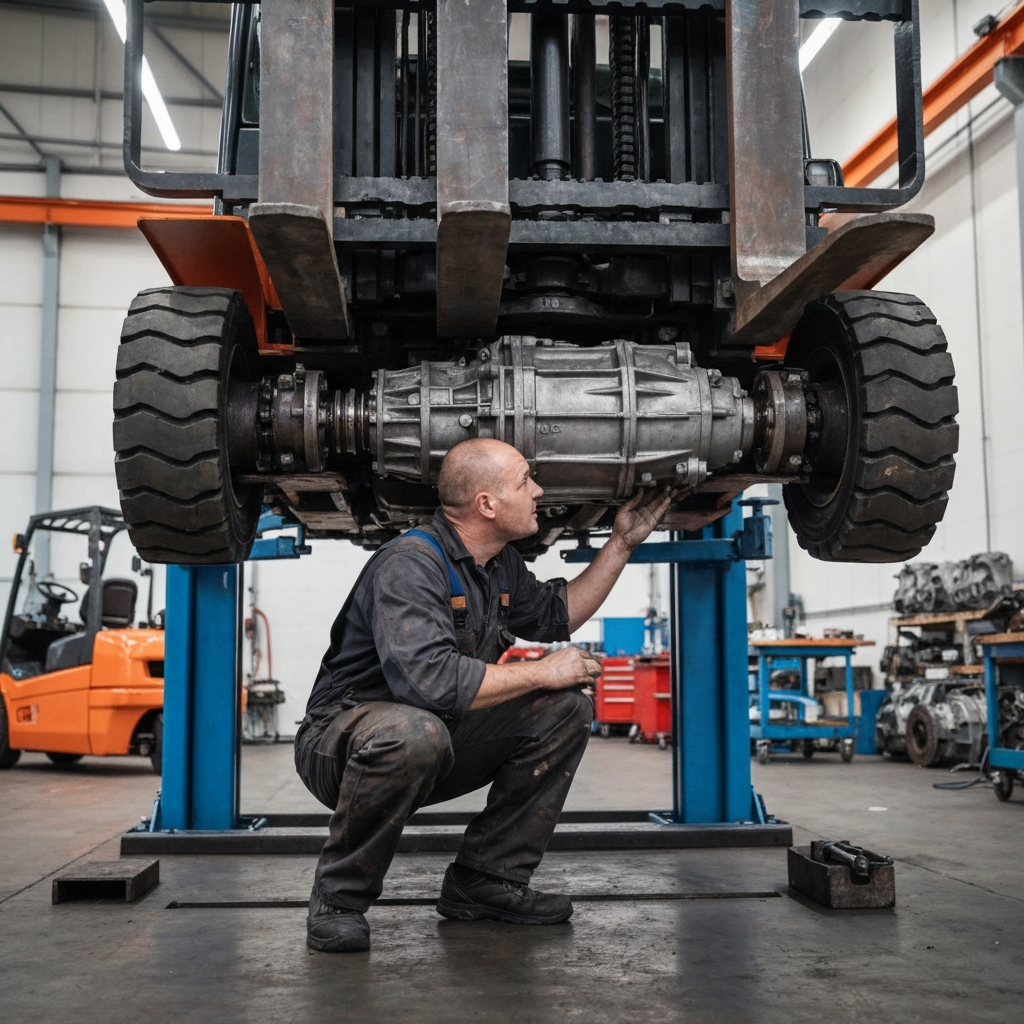
You don’t need to be a mechanic to tell when something is wrong with your forklift. Catching problems early can save you from a complete transmission failure. If you notice your machine hesitating, making strange noises, or slipping out of gear, it’s time to pay attention.
These symptoms are a red flag that your transmission parts may be worn or damaged. Ignoring these small issues can lead to much bigger and more expensive problems down the road. Let’s look at the specific signs that mean you need professional forklift repair.
Delayed Engagement and Slipping Gears
Have you ever pressed the pedal only for your forklift to pause before it starts moving? This delay is a classic sign of transmission problems. It often means the transmission is struggling to engage the gears properly, indicating an underlying issue that needs to be addressed before it gets worse.
Another serious warning sign is gear slippage. If your forklift unexpectedly slips out of gear while you’re operating it, this is not just an inconvenience—it’s a major safety hazard. This usually happens when internal components can no longer hold the gear, often due to wear or low transmission fluid.
These performance issues directly impact your productivity and can put your operators at risk. If you experience either delayed engagement or gear slippage, it is crucial to stop using the forklift and seek a professional diagnosis to prevent a total transmission breakdown.
Unusual Noises and Warning Smells
Your senses can be your best tool for detecting transmission trouble. A healthy forklift transmission should operate smoothly and quietly. If you start hearing strange noises, it’s one of the clearest warning signs that something is wrong internally.
These sounds are your forklift’s way of telling you it needs help. Common noises that signal a need for inspection include:
- Grinding sounds when shifting
- Loud clunking during acceleration
- A persistent whining noise
In addition to noises, a sharp, burning smell is another major red flag. This odor often means the transmission fluid is overheating or has become contaminated. If the fluid looks dark brown or smells burnt, it’s no longer protecting the transmission, and you should schedule a forklift repair immediately.
Fluid Leaks and Overheating Symptoms
Transmission fluid is vital for lubricating and cooling your forklift’s transmission. If you spot reddish-brown puddles under your machine, you likely have a fluid leak. Leaks are often caused by worn-out seals or gaskets and should never be ignored.
When fluid levels get too low, the transmission can’t cool itself effectively, leading to overheating. An overheating transmission can cause serious and often permanent damage to its internal components. The heat can warp metal parts, leading to catastrophic failure that requires a much more complex transmission repair.
A burning smell is a common symptom of overheating. If you notice this or see smoke coming from the machine, stop operating it immediately. Continuing to run a forklift with low fluid or overheating symptoms is a quick way to destroy the transmission.
Top Causes Behind Forklift Transmission Problems
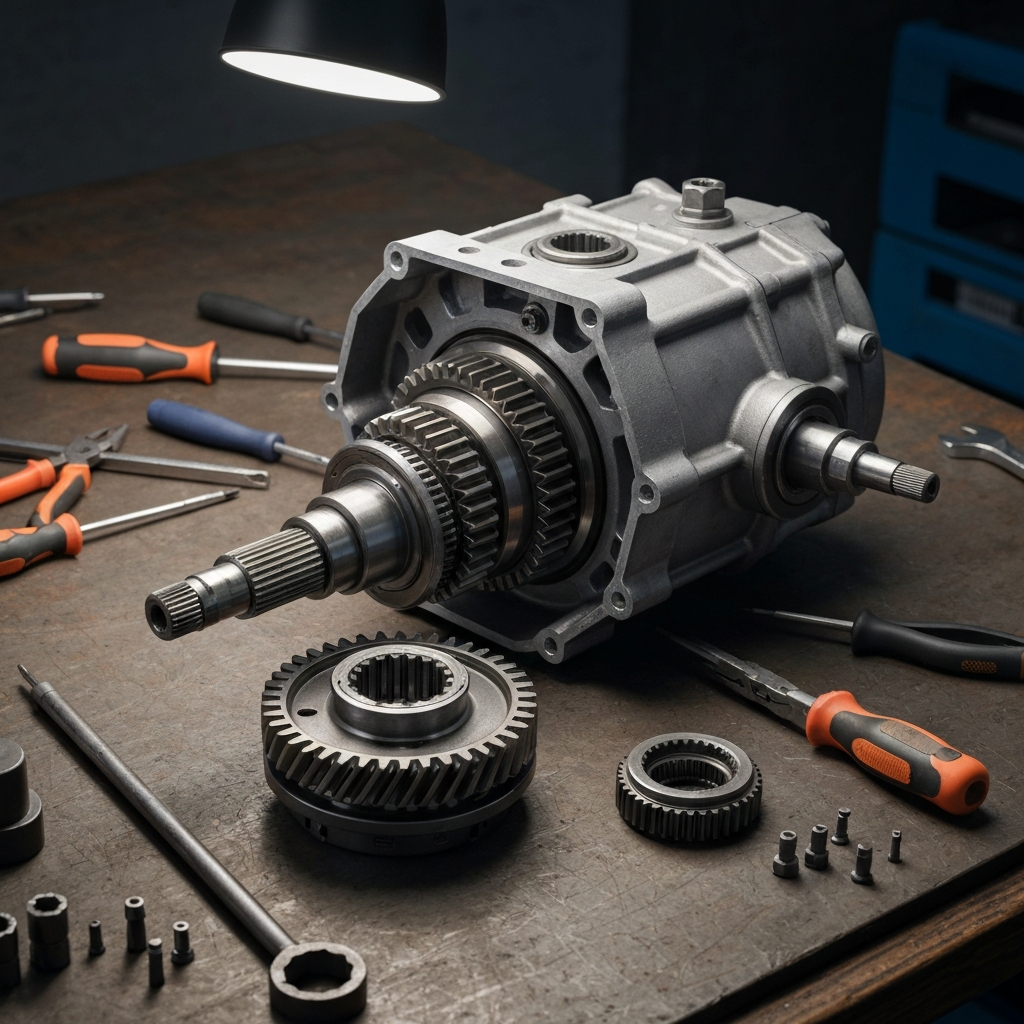
Forklift transmission problems rarely appear out of nowhere. They are typically the result of gradual wear and tear, often accelerated by a few common culprits. Understanding these causes can help you prevent costly repairs and keep your equipment running reliably.
From skipping routine maintenance to pushing the machine beyond its limits, many issues are preventable. A failing torque converter or other internal damage often starts with simple oversights. Let’s explore the top reasons why transmissions fail.
Lack of Preventive Maintenance
One of the most common reasons for transmission failure is simply a lack of regular maintenance. During busy periods, it’s easy to overlook essential tasks like checking and changing the transmission fluid. However, skipping these basic checks allows dirt and metal shavings to build up inside the system.
This contamination acts like sandpaper on the transmission’s internal parts, causing premature wear and tear. A proper forklift maintenance schedule is your best defense against these preventable issues. It helps you catch early warning signs before they turn into major failures.
Key preventive tasks include:
- Regularly checking transmission fluid levels and quality.
- Inspecting for leaks, loose fittings, or damaged components.
Consistent forklift maintenance not only protects your transmission but also improves the overall safety and efficiency of your operations.
Overloading and Operator Habits
Every forklift has a specific weight capacity for a reason. Consistently overloading your machine puts immense strain on the entire powertrain, especially the transmission. The extra weight forces the transmission to work harder to transfer engine power, leading to accelerated wear and a higher risk of failure.
Beyond heavy loads, operator habits play a huge role in transmission health. Aggressive driving, such as rapid acceleration or abruptly changing direction, puts stress on the gears and clutch. Similarly, operators who ignore warning signs or fail to perform daily checks can unknowingly contribute to expensive damage.
Proper training can make a significant difference. Teaching operators to manage the forklift’s speed smoothly and handle loads correctly can drastically extend the life of the transmission and prevent the need for frequent and costly forklift repair services.
Contaminated or Low Transmission Fluid
Transmission fluid is the lifeblood of your forklift’s transmission, responsible for lubrication, cooling, and hydraulic pressure. When this fluid becomes contaminated with dirt, water, or metal particles, it loses its ability to protect the internal components. Dirty transmission fluid increases friction and causes parts to wear out much faster.
Similarly, low fluid levels are just as dangerous. Without enough fluid, the transmission can’t cool itself properly, leading to overheating. This heat can break down the fluid even further and cause parts to warp or seize, resulting in complete transmission failure.
Regularly checking your fluid is a simple but critical step. If the fluid appears dark, has debris in it, or smells burnt, it is a clear sign that it needs to be changed immediately to prevent severe damage.
Expert Troubleshooting Steps for Faulty Forklift Transmissions
When you suspect transmission problems, a few initial troubleshooting steps can help you understand the situation. Simple DIY checks can sometimes identify minor issues you might be able to address yourself, like low fluid levels. However, they are also useful for gathering information before calling a professional.
These initial checks can help you determine if the problem is simple or if it requires an expert diagnosis. Let’s walk through some basic checks you can perform and when it’s time to call for professional help.
How to Pressure Test a Transmission
A pressure test is a diagnostic procedure used by professionals to check the health of a transmission’s hydraulic system. It involves connecting gauges to various ports on the transmission to measure the hydraulic pressure in different gears and operating conditions. Low or inconsistent pressure can indicate internal leaks, a worn-out pump, or issues with the shift linkage.
This test helps pinpoint problems within the transmission components without having to take the entire unit apart. It’s a critical step in accurately diagnosing issues like slipping gears or delayed engagement.
Here is an example of what pressure readings might look like. Note that ideal pressures vary by forklift model.
|
Port/Clutch |
Engine RPM |
Expected Pressure (PSI) |
|---|---|---|
|
Forward |
Low Idle |
160-180 |
|
Reverse |
Low Idle |
160-180 |
|
Main Line |
Stall Speed |
200-230 |
DIY Checks vs. Professional Diagnostics
You can perform several DIY checks to get a sense of your transmission’s health. These include checking the transmission fluid level and color, looking for visible leaks under the forklift, and listening for any unusual noises during operation. These steps are great for catching minor issues early.
However, these checks have their limits. If you’ve topped off the fluid and are still experiencing problems, it’s time for professional diagnostics. A technician has the specialized tools and expertise to perform tests that go beyond a simple visual inspection, like pressure testing the torque converter or checking for electrical faults.
While it’s tempting to try and fix things yourself, complex transmission problems require an expert repair technician. Guessing can lead to more damage and higher costs. Trusting a professional ensures the problem is diagnosed correctly the first time.
Fast Solutions: Should You Repair or Replace Your Forklift Transmission?
When faced with a transmission failure, you have a big decision to make: repair or replace? The best solution isn’t always obvious and depends on several factors. A repair might be faster and more affordable for newer equipment with minor damage.
However, for an older forklift with extensive wear, a full replacement could be a better long-term investment. Analyzing the cost, downtime, and expected reliability will help you make the right choice and avoid future costly repairs or replacement options.
Cost, Turnaround, and Reliability Considerations
Cost is often the biggest factor in the repair-or-replace decision. Generally, a transmission repair is less expensive than a full replacement, especially if the issue is caught early. Fixing worn seals or a faulty solenoid can be a fraction of the cost of a brand-new unit. However, if the damage is severe, repair costs can escalate, making a replacement more economical.
Turnaround time is another critical consideration. Downtime costs money, so getting your forklift back to work quickly is a priority. Repairs are often faster, particularly if the shop has parts in stock. A full replacement can take longer if the specific transmission needs to be ordered.
Finally, think about reliability. A professional repair can restore your transmission to excellent condition. But if your forklift is old and other components are also failing, a new or rebuilt transmission might offer better long-term peace of mind and prevent future breakdowns.
OEM Parts vs. Rebuilt Transmissions
When you need to get your forklift running again, you’ll have options for forklift transmission parts. Two common choices are using new Original Equipment Manufacturer (OEM) parts for a repair or installing a completely rebuilt transmission. Each has its pros and cons.
OEM parts are made by the same company that built your forklift, guaranteeing a perfect fit and original quality. However, they can be more expensive. A rebuilt transmission is a used unit that has been completely disassembled, cleaned, and fitted with new or refurbished transmission components to meet factory specifications.
Here’s a quick comparison:
- OEM Parts: Ensure original quality and fit but come at a higher cost.
- Rebuilt Transmissions: More cost-effective than new units and often come with a warranty, offering a balance of price and reliability.
The right choice depends on your budget, the age of your forklift, and how quickly you need it back in service.
Choosing the Right Forklift Transmission Repair Specialists
Not all repair shops are equipped to handle the unique demands of forklift transmissions. These systems are built for high torque and heavy loads, making them different from the transmissions in cars or trucks. That’s why choosing a specialist is so important for reliable forklift repair.
A dedicated specialist like Upright Forklift Repair has the experience, diagnostic tools, and access to quality forklift parts to do the job right. Whether you operate in Houston, Humble, or anywhere in North America, finding a trusted expert ensures your equipment is in good hands.
Brands That Excel in Forklift Transmission Services
Different forklift brands use different transmission technologies, so it’s important to find a repair service that is familiar with your specific equipment. From the robust systems in Hyster and Clark forklifts to the advanced designs in modern forklifts from Toyota, each requires a unique approach.
Experienced transmission repair services will have expertise across a wide range of manufacturers. This knowledge allows them to diagnose issues accurately and source the correct parts for a lasting repair. At Upright Forklift Repair, our technicians are trained to work on all major brands.
Here are some common brands we service:
|
Forklift Brand |
Common Transmission Characteristics |
|---|---|
|
Hyster |
Known for durable and powerful transmissions |
|
Clark |
Often uses rugged, reliable powertrain systems |
|
Toyota |
Features innovative and efficient transmissions |
|
Crown |
Specialized systems for their material handlers |
Finding Reliable Parts and Repair Kits Online
When you need forklift parts fast, turning to an online supplier can be a great option. However, it’s crucial to choose a reliable source to ensure you receive high-quality components that won’t fail prematurely. Look for suppliers who specialize in industrial equipment parts rather than general auto parts stores.
A good online supplier for forklift transmission repair kits or individual parts will offer detailed product descriptions and compatibility information. This helps you confirm you’re ordering the right part for your specific forklift model. Fast shipping is also essential to minimize downtime.
When shopping for forklift parts online, look for:
- A strong reputation with positive customer reviews.
- Clear warranty and return policies.
- Expert customer support to help with questions.
- A wide inventory of parts for various brands.
For guaranteed quality and expert advice, you can also source parts directly through a trusted shop like Upright Forklift Repair.
Real-World Repairs: Fixing Common Forklift Transmission Failures
Understanding the theory is one thing, but seeing how common repairs are handled in the real world provides greater insight. Addressing transmission failure promptly is key to preventing further damage and controlling costs. Many performance issues stem from specific component failures that a skilled technician can resolve.
From simple leaks to more complex internal problems, each repair follows a precise process. Let’s look at how a professional would tackle a broken return line and what it takes to ensure long-term performance after the job is done.
Addressing a Broken Return Line
A broken return line is a common but serious issue. This line is responsible for carrying cooled transmission fluid back to the transmission from the cooler. If it breaks or cracks, you’ll lose fluid rapidly, leading to overheating and a loss of hydraulic pressure.
The first step in this transmission repair is to accurately diagnose the leak to confirm it’s coming from the return line. Once identified, the technician will carefully remove the damaged line and inspect the fittings for any wear or tear.
After replacing the broken return line, the technician will also inspect nearby transmission components, such as gaskets and seals, that may have been damaged by the heat or pressure loss. They will then refill the system with fresh fluid and test the forklift to ensure the repair is successful and the transmission operates smoothly.
Ensuring Long-Term Performance After Repair
A successful transmission repair doesn’t end the moment your forklift is back on the floor. To ensure peak performance and get the most out of the repair, ongoing care is essential. This starts with following a schedule for regular maintenance to monitor the transmission and catch any new signs of wear early.
Operator behavior also plays a vital role in the life of your forklift. Make sure your team is trained to operate the equipment smoothly, avoid overloading, and perform daily inspections. These simple habits can prevent a recurrence of the original problem and help you avoid future expensive repairs.
Ultimately, a combination of expert repairs and diligent upkeep is the best way to extend the life of your forklift and its transmission. It protects your investment, enhances safety, and keeps your operations running without unexpected interruptions.
Conclusion
In summary, understanding forklift transmission issues is crucial for maintaining productivity in your operations. By recognizing the signs that indicate a need for expert repair, you can prevent costly downtime and ensure your equipment remains in top shape. Whether it’s addressing fluid leaks, unusual noises, or choosing between repair and replacement, taking timely action will save you both time and money. Don’t hesitate to seek out trusted specialists who can provide efficient solutions tailored to your needs. If you’re ready to get back to work quickly, reach out for a consultation today!
Frequently Asked Questions
How much does forklift transmission repair cost in the US?
The cost of a forklift transmission repair varies widely depending on the extent of the damage, the forklift model, and parts availability. Minor repairs might cost a few hundred dollars, while a full rebuild can cost several thousand. For an accurate estimate, it is best to get a professional diagnosis.
Can I rebuild my forklift transmission myself or do I need a pro?
While tempting for DIY enthusiasts, rebuilding a forklift transmission is a complex job that requires specialized tools and deep expertise. Without professional diagnostics, you risk misdiagnosing the problem or causing more damage. For a reliable and safe repair, it is highly recommended to trust a professional technician.
What’s the typical turnaround time for transmission repairs?
Turnaround time for a transmission repair depends on the complexity of the issue and the availability of reliable parts. Simple repairs might be done in a day or two, while major overhauls could take longer. At Upright Forklift Repair, we prioritize fast solutions to minimize your downtime.